Worship Matters
Worship Matters is a weekly reflection series covering a wide range of topics related to our liturgical tradition and practice. These reflections are intended to open a window into the deeper meaning of our worship, helping us to shine a light on the beauty and wisdom woven into our prayer. The series is a joint effort between the Sub-Committee on Liturgical Catechesis– made up of members of the Worship Committee–and the Pastoral Minister for Liturgy and Music.
The Parts of the Mass: The Entrance Song
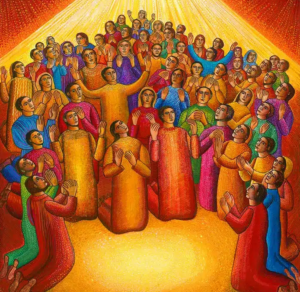
Last year, we began a series of reflections exploring a wide range of topics related to the Church at prayer through our weekly Worship Matters column This year, we continue our journey with a closer look at the various parts of the Mass, exploring the ritual elements that shape the central act of worship in our lives as Catholic Christians.
This week, we begin with the Entrance Song.
Few things have the power to gather people and unite a community quite like music. Each weekend, as we enter the Chapel, we arrive from different neighborhoods, towns, and walks of life, carrying with us the joys, challenges, and concerns of our daily lives. We greet familiar faces, reconnect with friends, and share stories from the past week. The Chapel fills with the warmth and energy of conversation and the joy of being together.
Yet, as the celebration draws near, something beautiful happens. We are invited to move from many conversations into one shared expression of prayer. We pause, open our hearts, and join our voices in a common song of praise.
In this sense, the Entrance Song becomes our first act of communion, reminding us that, despite our differences, we are members of the one Mystical Body of Christ. Each of us brings something unique to the gathering, but together our individual voices become something greater. Through melody, harmony, and rhythm, we give expression to our shared faith, hope, and love. Our unity does not erase our individuality; rather, it allows our many voices to become one beautiful offering of praise.
The words we sing also serve an important purpose. Rooted in the ancient tradition of singing psalms and antiphons at the beginning of the liturgy, the Entrance Song often introduces the central themes of the day’s Scripture readings and celebration. Even before the Word is proclaimed from the ambo, we begin to sing our faith, allowing the sacred texts to prepare our hearts to hear, receive, and embrace God’s Word.
The Entrance Song, then, is far more than its original intended purpose of accompanying the procession of ministers. It is an essential act of embodied prayer, drawing us together as one worshipping assembly and preparing our hearts and minds for the sacred mysteries we are about to celebrate.
Before we speak a word of greeting or hear the Scriptures proclaimed, we have already begun to pray together. And in the simple, profound act of joining our voices in song, we are reminded that we do not come to the Eucharist alone. We come as the one Body in Christ.
-
October 18, 2026 - Issue #28 - PARTS OF THE MASS: The Entrance Song
The Parts of the Mass: The Entrance Song
Last year, we began a series of reflections exploring a wide range of topics related to the Church at prayer through our weekly Worship Matters column This year, we continue our journey with a closer look at the various parts of the Mass, exploring the ritual elements that shape the central act of worship in our lives as Catholic Christians.
This week, we begin with the Entrance Song.
Few things have the power to gather people and unite a community quite like music. Each weekend, as we enter the Chapel, we arrive from different neighborhoods, towns, and walks of life, carrying with us the joys, challenges, and concerns of our daily lives. We greet familiar faces, reconnect with friends, and share stories from the past week. The Chapel fills with the warmth and energy of conversation and the joy of being together.
Yet, as the celebration draws near, something beautiful happens. We are invited to move from many conversations into one shared expression of prayer. We pause, open our hearts, and join our voices in a common song of praise.
In this sense, the Entrance Song becomes our first act of communion, reminding us that, despite our differences, we are members of the one Mystical Body of Christ. Each of us brings something unique to the gathering, but together our individual voices become something greater. Through melody, harmony, and rhythm, we give expression to our shared faith, hope, and love. Our unity does not erase our individuality; rather, it allows our many voices to become one beautiful offering of praise.
The words we sing also serve an important purpose. Rooted in the ancient tradition of singing psalms and antiphons at the beginning of the liturgy, the Entrance Song often introduces the central themes of the day’s Scripture readings and celebration. Even before the Word is proclaimed from the ambo, we begin to sing our faith, allowing the sacred texts to prepare our hearts to hear, receive, and embrace God’s Word.
The Entrance Song, then, is far more than its original intended purpose of accompanying the procession of ministers. It is an essential act of embodied prayer, drawing us together as one worshipping assembly and preparing our hearts and minds for the sacred mysteries we are about to celebrate.
Before we speak a word of greeting or hear the Scriptures proclaimed, we have already begun to pray together. And in the simple, profound act of joining our voices in song, we are reminded that we do not come to the Eucharist alone. We come as the one Body in Christ.
-
June 7, 2026 - Issue #27 - THE SIGN OF PEACE
THE SIGN OF PEACE
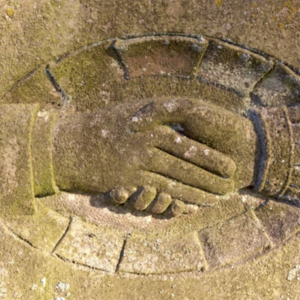 Just before we approach the altar to receive the Eucharist, the Church invites us to share a simple but profound gesture: the Sign of Peace.
This often-misunderstood pause in the liturgy is one that carries deep theological meaning. Through the reforms of the Second Vatican Council, the Church renewed its understanding that Christ is present in many ways during worship: in the Eucharist, in the proclaimed Word, in the presider, and in the gathered assembly. The Sign of Peace flows from this recognition that Christ is present in one another.
Far from being a modern addition, the Sign of Peace is one of the oldest rituals in Christian worship. Known in the early Church as the “Kiss of Peace,” it was a visible expression of reconciliation, unity, and love among believers preparing to share the Eucharist. Over the centuries, the practice evolved and, in some places, disappeared altogether before being restored following Vatican II.
Today, the form of the gesture varies according to culture and custom. Some exchange a handshake, others an embrace, a bow, a smile, or a simple spoken greeting. No single gesture is prescribed. What matters is not the form itself, but what it signifies: the recognition of Christ’s presence in another person and our desire to live in peace and unity with one another.
The Sign of Peace is not intended as a social greeting or a time for conversation. Rather, it is a sacred expression of the communion we are about to share. It is a moment to acknowledge that, despite our differences, we are one Body in Christ. Like a family gathering around a common table, we turn toward one another with a gesture of reconciliation, affection, and unity.
As we exchange this sign, we echo the words of Jesus: “Peace I leave with you; my peace I give to you.” In that brief moment, we proclaim a profound truth—that Christ is among us, and that we are bound together in his peace and love.
-
May 24, 2026 - Issue #26 - ASCENSION TO PENTECOST: Ancient Hymn to the Holy Spirit
ASCENSION TO PENTECOST: Ancient Hymn to the Holy Spirit
 Throughout the Church year, our great liturgical feasts are filled with a rich treasury of music. We all know and cherish the many beloved Christmas carols. At Easter, without the majesty of the great songs proclaiming the resurrection and the joyful strains of our alleluias, it would simply not feel the same. In fact, if we were to close our eyes and hear the hymn O Come, O Come, Emmanuel or Ubi Caritas sung, we would no doubt be transported to a specific liturgical season, feast day, or ritual action within the Church year. Music wedded to biblical and inspired poetic texts has always had the power to draw us ever deeper into the mystery of God.
The great solemnity of Pentecost, which commemorates the descent of the Holy Spirit upon the Apostles and other disciples following the death, resurrection, and ascension of Jesus Christ (Acts of the Apostles, chapter 2), also has its own distinctive music. This weekend we will sing a setting of the ancient sequence Veni Sancte Spiritus(Come, Holy Spirit) immediately before the Gospel. This chant is traditionally sung at solemn liturgical and sacramental moments in the life of the Church, including ordinations, the sacrament of Confirmation, the election of a pope, the Easter Vigil, and, of course, Pentecost.
The sequence is generally thought to have emerged around the ninth century, when Gregorian chant was flourishing throughout Europe. Because these lengthy chants were often difficult to learn, poets and musicians developed poetic texts to help singers memorize complex melodies. Many early sequences drew from the final “A” of the Alleluia, a melodic extension known as a melisma or jubilus. While the Church included many sequences during the medieval period, the current Roman Missal retains four: Victimae Paschali Laudes (Easter Sunday), Veni Sancte Spiritus (Pentecost), Lauda Sion (Corpus Christi), and Stabat Mater (Our Lady of Sorrows).
Because chant originally served as a meditation on Scripture, the Pentecost Sequence developed as a musical reflection on the Alleluia verse: “Come, Holy Spirit, fill the hearts of your faithful and kindle in them the fire of your love.” Literary scholars, musicians, and liturgists have sometimes referred to the Pentecost Sequence as the Church’s “Golden Sequence.”
As we sing these words this weekend, may we pay attention to the implications of this plea to the Holy Spirit. May we experience and know the enormous and unfathomable power of this force of Love that opened the eyes and hearts of the Apostles to recognize that the Advocate, which Jesus had promised, has truly come to unite and not divide, to heal and to restore, to disturb the status quo and free us from our complacency, to dispel all fear and wipe out all despair.
-
May 10, 2026 - Issue #25 - ASCENSION TO PENTECOST: Getting Down to the Mission Part
ASCENSION TO PENTECOST: Getting Down to the Mission Part
We’re familiar with the scene when Jesus sends the disciples out, two by two, on a mission. He instructs them to travel throughout Judea and beyond, to heal the sick, cast out unclean spirits, and proclaim the reign of God. And if that wasn’t challenging enough, Jesus tells them to take nothing with them but a walking stick—no bread, no bag, no money, not even a second tunic (Mark 6:8).
In Two by Two, an episode from the TV series The Chosen, the creators vividly depict the disciples’ shock and resistance to Jesus’ command. We witness their barrage of protests and questions: “Rabbi, we are not you, how are we supposed to heal?” “What are we supposed to eat?” “They will kill us in that region.” “How can we do this without you?” Unphased, Jesus firmly but gently tells them to trust him and believe that God’s Spirit will be with them. Then he departs alone.
In the first reading for the Solemnity of the Ascension—celebrated this past Thursday—we encounter a similar scene. A moment of shock and confusion for the disciples that no doubt elicited more questions: “Is he really gone?” “What are we supposed to do now?” One can imagine how unprepared and disoriented they must have felt.
In Paul’s Letter to the Ephesians from that same liturgy, we hear the prayer: “May the God of our Lord…give you a Spirit of wisdom and revelation resulting in knowledge of him. May the eyes of your hearts be enlightened that you may know the hope that belongs to his call.” What a prayer for reluctant, confused disciples! And yet, these are precisely the gifts both the disciples and all of us need to move forward—to get down to the mission part.
Author and educator, Mary McGlone, CSJ, equates our circumstances with that of the disciples immediately after the Ascension: “Like them, we must face the very real dispiriting events of our times, the circumstances that cannot and should not be ignored. We may share their desire to simply stand looking heavenward for a solution, but we will also hear the promptings of angels and prophets who remind us that prayer is only part of the equation.”
As we journey towards the celebration of Pentecost, may we have the courage to pray for the blessings of wisdom, awareness, and enlightened hearts. That through our prayer we will be impelled to “get down to the mission part” and act together, strengthened and encouraged in the knowledge that Christ, who sends us forth to preach the good news, will be with us for all eternity.
-
May 3, 2026 - Issue #24 - RITUAL & SYMBOL: Water of Life: The Sprinkling Rite
RITUAL & SYMBOL: Water of Life: The Sprinkling Rite
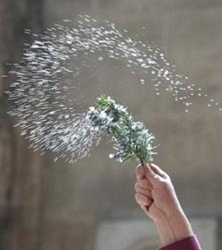
Along with light and fire, oil, bread and wine, water is one of the primary symbols of our Christian faith. This is not surprising, as water is essential for all life. From the beginning of creation, it reveals both God’s creative power and sustaining presence.
Throughout salvation history, water emerges as a powerful and dynamic sign. Its force is seen in the great flood through which Noah and his family are saved, and in the parting of the Red Sea, where the Israelites pass from slavery to freedom. The psalms speak of waters that both threaten and console, giving voice to our longing for God. In the New Testament, water takes on deeper meaning: in the Baptism of Jesus in the Jordan, in his washing of the disciples’ feet, and in the water flowing from his pierced side on the cross—signs of new life poured out for the world.
For us as Christians, our entrance into the Body of Christ begins with water. Whether poured over us or entered through immersion, the waters of Baptism mark us as participants in the life, death, and resurrection of Jesus. In these waters, we are both buried with Christ and raised with him—freed from sin and reborn into new life.
Throughout the Easter season, the Church invites us to return to this foundational grace. Week after week, the Sprinkling Rite recalls our baptism. While it may be used at other times during the liturgical year, during the Easter season it replaces the Penitential Act as a communal remembrance of who we are and whose we are.
As the blessed water is sprinkled over the assembly, we feel its touch—cool, refreshing, alive. In that simple encounter, we are drawn back into the very mystery it signifies. Water cleanses and renews; it restores and gives life. Yet it also carries a deeper invitation: to let go of what no longer gives life, to die to the old self, and to be renewed in the light of Christ’s resurrection.
In this way, the waters of Baptism are never just a memory. They are a living reality, continually calling us to conversion, to renewal, and to a deeper participation in the life of Christ. Each drop reminds us that we are claimed, loved, and sent forth—renewed again and again by the grace that flows from the heart of God.
-
April 19, 2026 - Issue #23 - SACRED SPACE: Christ our Light: The Paschal Candle
SACRED SPACE: Christ our Light: The Paschal Candle
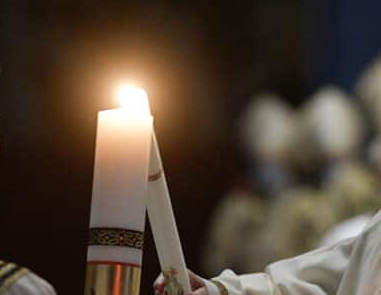 Every year, our Easter Vigil begins with the blessing of fire and the lighting of the Paschal Candle. Even before the presider greets the assembly, our attention is drawn to the new fire and to the promise this light proclaims.
This large and noble candle, which leads the opening procession of the Easter Vigil, is the preeminent symbol of the entire Easter Season. As Paul Turner explains:
“The Paschal Candle first announces the news of the Resurrection, followed by the Glory to God, the Alleluia, the Gospel, the homily, and, of course, the Eucharist. All join to make the same proclamation: Christ is risen! So great is this message that it takes fifty days to celebrate. That Paschal Candle burns in our churches throughout the seven weeks, proclaiming: Christ is risen, and we too may rise!”1
Beyond the Easter Season, the Paschal Candle is lit on two other sacred occasions: Baptism and funerals. At Baptism, its flame reminds us that we have become members of the Body of Christ, called to carry the light of faith, hope, and love into the world through our participation in the Paschal Mystery.
The candle is lit again at the time of death to recall the promise first given in Baptism. In our grief, we turn to the symbols of our faith: the sprinkling of holy water, the placing of the white garment—the pall—over the coffin, and the lighting of the Paschal Candle. Through these sacred signs, we proclaim once more that those who die in Christ will pass from death to life.
As we gaze upon the Paschal Candle throughout these fifty days of Easter, may it remain for us a constant reminder that death is not the end, but the passage from darkness into eternal light—the unfading Light of Christ.
1Bulletin Inserts for the Liturgical Life of the Parish: Liturgical Funrnishings © 2020. Archdiocese of Chicago: Liturgy Training Publications. All rights reserved. Written by Paul Turner.
- April 5, 2026 - Issue #22 - LITURGICAL YEAR: The Three Days
- March 29, 2026 - Issue #21 - PALM SUNDAY: The King We Choose
- March 15, 2026 - Issue #20 - LITURGICAL YEAR:The Three Pillars of Lent-Part II: Prayer
- March 8, 2026 - Issue #19 - LITURGICAL YEAR:The Three Pillars of Lent-Part I: Fasting
-
February 28, 2026 - Issue #18 - LITURGICAL YEAR: Lent - A Season of Return
LITURGICAL YEAR: Lent – A Season of Return

By the year 330, the early Church had already embraced a forty-day Lenten season — a sacred period set aside to prepare hearts for the mystery of Easter. From its earliest beginnings, Lent has never been merely about sacrifice or deprivation. Beyond being a time of purification and preparation for those entering the Church through Baptism, it is a season to renew our commitment to living the Resurrection of Jesus in our own time and place.
Considered the three pillars of Lent, the practices of fasting, prayer, and almsgiving are spiritual disciplines that, at their heart, are about relationship — our relationship with God, with ourselves, and with others. Through prayer, we open ourselves to the many ways God is revealed in each moment and encounter. Through fasting, we become more aware of how easily we are driven by distractions and impulses — whether from screens, societal pressures, or personal expectations. Fasting reminds us of our innate capacity to choose. It empowers us to step away from automatic responses and make conscious decisions about our actions and habits. Through almsgiving, or acts of generosity, we recognize our connectedness to others and become more sensitive to their needs, especially those who are marginalized or forgotten.
Across these six weeks, grounded in the disciplines of prayer, fasting, and almsgiving, we are also invited to slow down and look inward — to examine our hearts and to ask again who this Jesus is, and what his life, death, and resurrection truly mean for our lives today.
It is a time of re-cognition, or re-knowing — to, in the words of Richard Rohr, “return to the Garden, where our true Center lies in the life of God.” It is a time to discover anew that before fear, before our endless striving for control, before believing we were not enough, we were created whole and free. Lent invites us to rediscover that original blessing — to trust that our identity begins not in failure, but in love.
It is a season of remembrance — or more deeply, re-membering: reconnecting heart and mind to the way of Jesus. To follow him is to “do this in memory of me” — to wash the feet of others, to love without counting the cost, and to recognize that blessedness is found in humility, compassion, and our shared belonging with all creation.
And Lent calls us to awaken: to resist the relentless prodding of the egoic mind and rest in the ever-present power of the Spirit. It is a process of conversion, lived out through daily practice: attentive to God’s presence in this breath, in this moment, and in this encounter.
Lent gently reminds us that renewal begins not by striving harder, but by returning home — to God, to ourselves, and to one another.
-
February 15, 2026 - Issue #17 - LITURGY AND JUSTICE — Part Three: Taken, Blessed, Broken, Poured Out
LITURGY AND JUSTICE — Part Three: Taken, Blessed, Broken, Poured Out
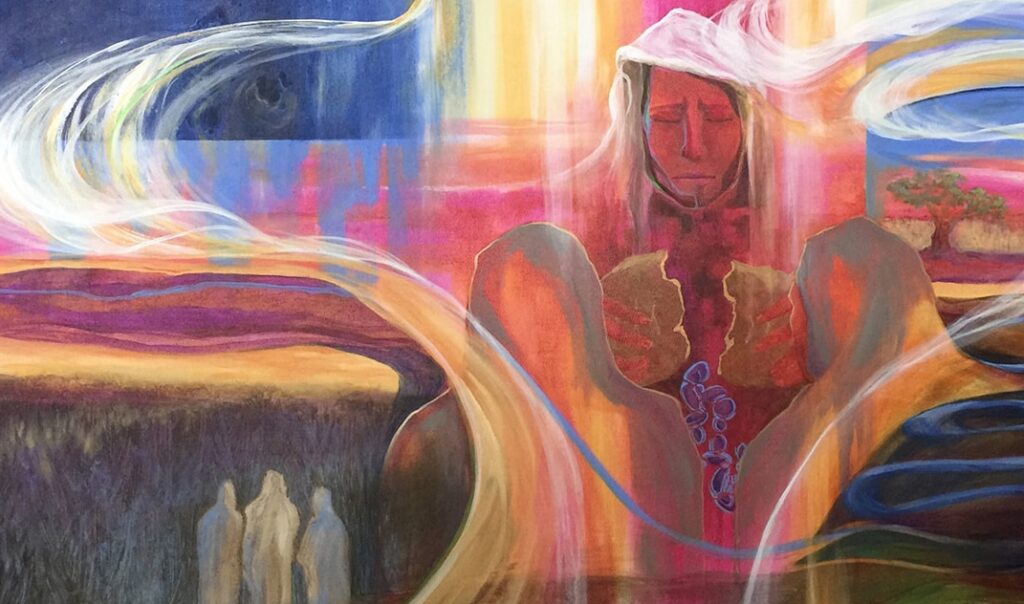
Our final examination of the connection between Liturgy and Justice brings us to the Liturgy of the Eucharist. After hearing God’s Word and voicing our prayers for the needs of the world, we remember that our responses—“Thanks be to God,” “Amen,” “Hear our prayer”—do more than express our faith. They affirm our solidarity with all who suffer and prepare our hearts to approach the Eucharistic table.
In the Preparation Rite, we participate in the ancient tradition of bringing forward bread and wine to be transformed and shared, and of offering our gifts for those in need. From the early days of the Church, Christians brought not only bread and wine for the eucharistic meal but also provisions for the poor. This “collection” was tangible and personal: bread, wine, olive oil, and other goods—literally “the work of human hands”—were placed at the altar as an offering for the liturgy and for those in need.
As Justin Martyr wrote in his First Apology (c. 153 AD):
“Those who are well off, and willing, give as each chooses. What is gathered is given to the one who presides to assist orphans and widows, those deprived by illness or any cause, prisoners, immigrants—in a word, all who are in need.”Each weekend at the Paulist Center, along with the offering of bread and wine, we present a basket of food from our pantry, which distributes items to our neighbors on Tuesdays and collect funds to support fifty-two organizations aligned with our mission of justice, advocacy and care for the poor. This action alone reveals the intrinsic link between worship and witness.
In the Eucharistic Prayer and Communion Rite, we remember and we participate in Christ’s command to “Do this in memory of me.” In doing so, week after week, we affirm our willingness to truly become what we receive: a people taken, blessed, broken, and poured out for the life of the world. Nourished and transformed, we commit to living and spreading Christ’s radical and indiscriminate love as we prepare to depart.
The celebration concludes with the Dismissal Rite which includes a final blessing and the command: Ite, missa est—“Go, the Mass has ended.” The emphasis falls on that single word: Go. With our final “Thanks be to God,” we are sent. This final command commissions us to go forth, with joy, with hope and with the understanding that what we just celebrated shapes how we live—our desires, attitudes, and actions in a world longing for healing and hope. As the theologian Don Saliers reminds us, “Participation in the symbolic action requires more than participation in the phenomena of worship; it requires participation as a living community engaged in the struggle to show in life what is implied in the gathering.”1
¹ Don Saliers, Liturgy and the Moral Self (Collegeville, MN: Liturgical Press, 1998), 224.
-
February 8, 2026 - Issue #16 - LITURGY AND JUSTICE: The Prophetic Word
LITURGY AND JUSTICE — Part Two: The Prophetic Word
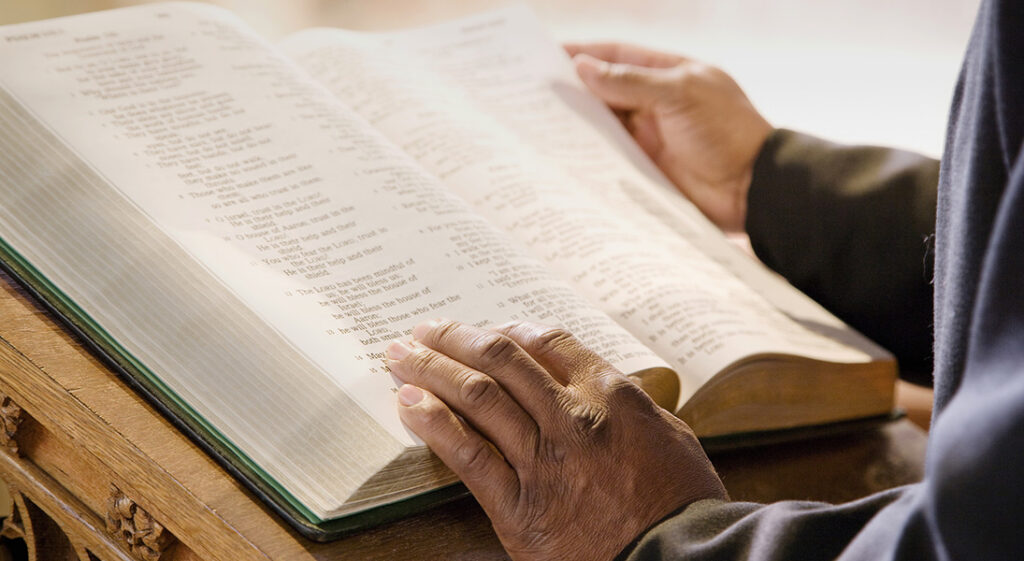
Open Bible on Church Altar With Preacher’s Hands
In this week’s column, we continue with part two of our examination of the connection between liturgy and justice and turn our attention to the Liturgy of the Word.
Radical Hospitality
Each Eucharistic celebration begins with the Introductory Rites, drawing us into communion as the Body of Christ through song and greeting. Almost immediately, the penitential act invites us to confront the sins and omissions that wound that communion and to ask a deeper question: who is not here? From the outset, the liturgy challenges us to embody Christ’s inclusive welcome, calling us to hospitality, justice, and the full dignity of every person—especially those most often excluded.
The Prophetic Word
In a culture saturated with words and unceasing streams of information—through social media, email, and endless commentary—it is easy to miss the depth and transforming power of the proclaimed Word. Yet Scripture is, at its heart, the story of God’s relentless love: a persistent call drawing all whom God has created and named beloved back into the ways of truth, justice, and peace. Through the prophets, God’s voice resounds again and again, affirming human dignity and demanding justice—a theme echoed more than a thousand times throughout Scripture and nearly one hundred and fifty times in the Psalms.1 As noted in the previous column, we are invited not only to listen attentively to the Word, but to profess our faith through our “Thanks be to God,” the sung psalm response, or the acclamation, “Praise to you, Lord Jesus Christ,” and to affirm our commitment to living the prophetic Word in the world.
In the homily, this prophetic Word is broken open so that we may further discern its meaning for our lives and be challenged to embody God’s justice and peace in the world. In the General Intercessions (Universal Prayer), the Church gives voice to the needs of the world and the local community, lifting before God a broken creation longing for healing and wholeness. When we respond, “hear our prayer,” we do more than ask for God’s intervention; we commit ourselves to solidarity with all who suffer, and to becoming instruments of the very justice, mercy, and peace for which we pray.
In the next and final column on Liturgy and Justice we will examine how the liturgy’s call to justice and the transformation of the world is expressed and embodied in the Liturgy of the Eucharist.
——–
1Caruso, Lucio, Liturgy and Justice, Part 2 © 2007 Federation of Diocesan Liturgical Commissions, Washington DC 2007, www.fdlc.org
-
February 1, 2026 - Issue #15 - LITURGY AND JUSTICE: To Be the Mystical Body of Christ
LITURGY AND JUSTICE: To Be the Mystical Body of Christ
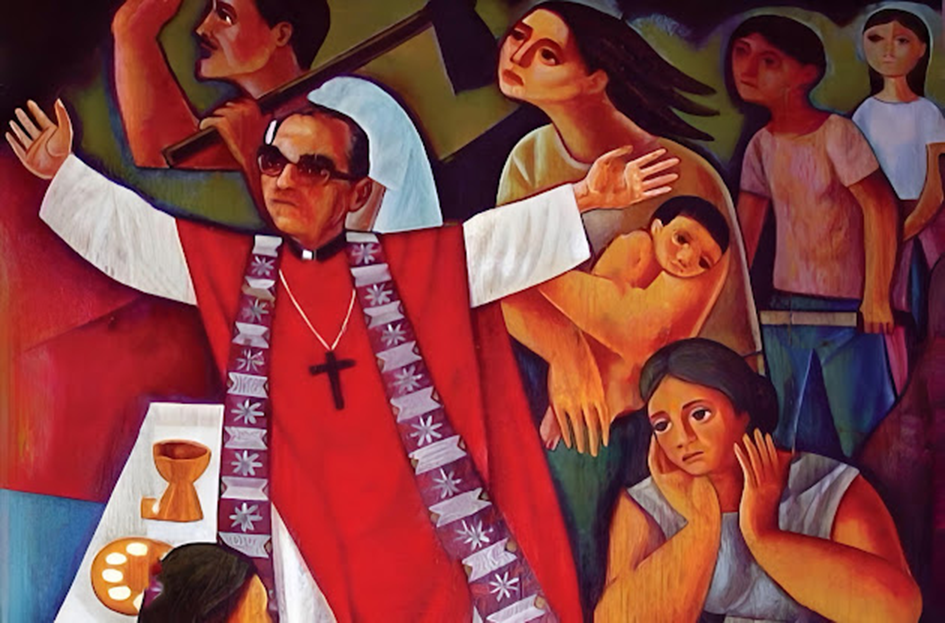
For those who have worshipped at the Paulist Center for any length of time, the deep connection between liturgy and justice is well known. Yet it is worth remembering that for the leaders of the early twentieth-century liturgical movement —the movement that eventually gave rise to the reforms of Vatican II—this relationship was not simply complementary. It was inseparable. To celebrate the liturgy was to be formed for mission and sent forth for the transformation of the world.
Born amid profound social and ecclesial upheaval, Benedictine monk and theologian Virgil Michel emerged as one of the movement’s most influential voices. Writing in a time marked by war, economic instability, and deep social division, Michel insisted that the Church’s worship could never be detached from the work of justice.
For Michel and his contemporaries, the renewal of society depended on the Church truly living as the Mystical Body of Christ. The place where this identity is most deeply formed is the celebration of the Eucharist, where the community becomes the means through which Christ continues his saving work in the world. From this perspective, liturgical renewal and social transformation are inseparable.
This vision reemerges in Pope Leo’s recent encyclical, Dilexi Te, in which he names poverty as the result of pervasive and entrenched “structures of sin”—social, economic, and political systems that wound human dignity. Poverty, he reminds us, takes many forms, extending beyond material deprivation to include those who are marginalized, vulnerable, or oppressed. The encyclical draws these realities into the heart of worship, insisting that the poor are not merely a sociological category but “the very flesh of Christ.” Thus, works of mercy, including almsgiving, are not optional but essential acts of authentic worship—practices that cultivate empathy, deepen encounter, and shape moral responsibility.
Revisiting this vision today is both timely and necessary. In an age marked by fear and anxiety, it can be tempting to reduce liturgy to something that merely comforts or soothes. Full, conscious, and active worship does more. It equips us to live as the Mystical Body of Christ, bearing responsibility for one another and all God’s creation. When we gather to celebrate the Eucharist, each time we proclaim “Amen” or “Thanks be to God,” we do more than affirm our faith—we commit our lives to Christ’s way of love, becoming bearers of peace, workers for justice, conduits of grace, and witnesses of light in a wounded world.
In the weeks ahead, we will continue exploring this vital relationship between liturgy and justice as it unfolds in the Liturgy of the Word, the Eucharist, and the Dismissal—where we are sent forth to become what we pray and live what we profess.
-
January 25, 2026 - Issue #14 - THE LITURGICAL YEAR: Ordinary Time: Contemplation and Connection
THE LITURGICAL YEAR: Ordinary Time: Contemplation and Connection

As the last vestiges of the Christmas season are carefully packed away—trees and lights, ornaments and nativity scenes—we find ourselves entering one of two extended periods in the liturgical year that, though labeled “Ordinary,” are anything but. Rather than being plain or uneventful, these weeks invite us into deeper contemplation and renewed connection.
Ordinary Time, the longest season of the Church year, encompasses those weeks that do not focus on a single, particular aspect of the mystery of Christ (Universal Norms on the Liturgical Year and the General Roman Calendar, 43). Christmas Time celebrates the Incarnation, the birth of Christ. Easter Time proclaims the joy of the Resurrection. Ordinary Time is devoted to the mystery of Christ in all its fullness—his life, teachings, ministry, and abiding presence among us.
Over the centuries, the Church has revised the liturgical calendar several times, carefully pruning feasts and holy days that lacked historical grounding or universal significance. These reforms were intended to sharpen our focus on the two great poles of Jesus’ life: his birth and his resurrection, the foundational mysteries of our faith.1
Within Ordinary Time, we are invited to pause—to linger. As Joan Chittister so beautifully suggests, this is a season to “rest in the contemplation of those centers of the faith that are the lodestones of our soul.” It is a time not for spectacle, but for depth; not for franticness, but for attentiveness.
Chittister further reflects that the stretches between Christmas and Lent, and between Pentecost and Advent, are inherently contemplative. “It is in the contemplation of the mysteries of the faith,” she writes—“the birth, life, passion, death, and resurrection”—that we find the motivating power to become what we behold in Jesus.
In this in-between time, the Gospels open before us the depth and breadth of Jesus’ message—of life, of love, and of what it truly means to be a disciple. This extended annual retreat invites us, again and again, to resist fear and despair and the world’s false promises and persistent pull toward money, power, security, and success. Instead, to enter real life, Jesus tells us, is to stand with the poor; to offer refuge and welcome to migrants and refugees; to uplift the dignity and voices of women and all who live on the margins; to reject war and injustice in every form; and to lay down our lives in love for one another.²
By quieting the noise of endless distractions, Ordinary Time continually draws our attention back to Jesus—who was, who is, and who is to come.
1 Joan Chittister, OSB, The Liturgical Year: The Spiraling Adventure of the Spiritual Life (Nashville: Thomas Nelson, 2009), 96.
2 Ibid., 98. -
December 11, 2025 - Issue #13 - THE LITURGICAL YEAR: Beyond December 25: Living the Season of Light
THE LITURGICAL YEAR: Beyond December 25: Living the Season of Light
 For us as Christians, experiencing Christmas as a season in its fullness can be a genuine challenge. Our secular world is consumed by the frenzy of buying and gifting, coordinating family visits, and navigating long-held traditions—all in a breathless rush toward a single day: December 25. That day arrives and departs almost as quickly as it comes. Anyone who has wandered into a HomeGoods store knows the truth of this well: no sooner has Christmas Day passed than Valentine’s décor fills the shelves, with scarcely a trace of Christmas left behind.
For those of us steeped in the spirituality of the liturgical year, however, Christmas is not a moment but a season— a sacred unfolding of feasts that stretches from the Vigil of Christmas on December 24 through the Solemnity of the Baptism of the Lord on January 11. As Joan Chittister reminds us, “The full scope of Christmas is only truly experienced in the feasts of the Holy Family, Mary the Mother of God, the Epiphany, and the Baptism of Jesus. It is to these other layers of the birth of Jesus that the Christmas season points us.”
Each feast of Christmastide becomes another star on the horizon of the soul, confirming what our hearts already know: God is with us. Again, Chittister writes, “The Radiant Dawn has swallowed up the darkness. It is, indeed, the season of Light.”
The Christmas season is not meant to simply leave us with a childlike image of the infant Jesus lying in a lowly manger. Rather, it invites us into spiritual maturity—into an encounter where the meaning of a stable is inseparable from the promise of an empty tomb. Christmas opens before us the possibility of seeing through the darkness of doubt and despair, especially in these wearied times. It calls us to lift our gaze beyond the night, to follow the stars still shining ahead, and to embody that light ourselves—becoming, in turn, signs for others that the gift of the Word made Flesh is real, present, and alive within each of us.
May the coming Christmas season be received as a gift of grace, hope, and peace— shaped by the steadfast faith of Mary and Joseph, the surrender of Stephen, the first martyr, the courage of foreign travelers, and the fierce conviction of John the Baptist, inspiring us to live more fully as people of the Light.
-
December 4, 2025 - Issue #12 - SIGNS AND SYMBOLS: The Advent Wreath
SIGNS AND SYMBOLS: The Advent Wreath

The Church’s liturgy is rich in symbols. Bread and wine, water and fire, the altar, the ritual books, the cross; bowing, singing, standing; the interplay of color, texture, light, darkness, sound, and silence—all form a living matrix through which God communicates. These symbols do not stand alone. Like the universe described by quantum physics—where everything is interconnected and interrelated— liturgical symbols interact with each other, transferring and increasing energy, shedding light and unfolding meaning. They reveal who we are as Christians, our relationship with God and one another, and our shared participation in the paschal mystery of Christ.1
Simple in form and rich in meaning, the Advent wreath–which marks our four-week pilgrimage towards the Feast of the Incarnation–gathers our longing for Christ into a circle of evergreen branches and growing light. The circle, like the galaxies in our universe, reminds us of God’s eternal promise, without beginning or end. The evergreens speak of life that persists even in winter’s barrenness and harshness. Into this circle are set four candles—traditionally three violet and one rose—echoing the colors of the season’s vesture. Violet invites us into quiet hope and repentance; rose, lit on the Third Sunday, proclaims the message that joy is at hand!
The wreath’s most powerful symbol is its increasing light. As the days of December darken, we kindle more candles: one on the First Sunday of Advent, two on the Second, and so on until all four burn brightly the week before Christmas. The growing flame mirrors our growing readiness to welcome the Light of the World.
The origin of the Advent Wreath and candles can be traced back to pre-Christian Germanic cultures who would light candles during the winter solstice to honor the return of the light. This practice was adopted by Christians in the Middle Ages as a way to mark the season of Advent.
At church or at home, the Advent wreath becomes a gentle ritual of preparation. Blessed at the beginning of the season and lit during Mass, evening prayer or the evening meal, it steadies our hearts, slows our pace, and reminds us—week by week—of the hope, peace, joy, and love that Christ brings. Through this simple circle of light, the great language of the liturgy speaks once again: Emmanuel, God-with-us, is drawing near.
1Judith M. Kubicki, “More than Words: The Many Symbols of the Liturgy,” America Magazine, vol. 198, no. 18 (May 2008).
-
November 23, 2025 - Issue #11 - LITURGICAL YEAR: Advent: The Three Comings of Christ
LITURGICAL YEAR: Advent: The Three Comings of Christ
“Advent,” from the Latin, means “coming.” But the Advent we keep is not simply about preparing to celebrate Christmas. As author and teacher Joan Chittister, OSB, reminds us, Advent invites us to attend to three different comings of Christ.
The first is the remembrance of Jesus’ birth—God entering our world and taking on our human condition. In Advent’s prayers and scriptures, we are invited to reflect on God’s deep longing to be close to us, to share our life in the person of Jesus.
The second coming is the one unfolding now—in the words of Scripture, in the Eucharist, and in the gathered community. Christ is present in our daily lives: in prayer, relationships, encounters, thoughts, and in the events that shape our world. Our lives themselves are an Advent, for Christ is continually being born within and among us.
The final coming looks to the future, to our belief that Christ will return in glory and God’s reign will be made complete. This promised fullness—longed for across the ages—threads together past, present, and future into what Chittister calls “one long sigh of the soul.” These three comings weave through every Advent liturgy, shaping how we pray and how we hope.
To “prepare the way of the Lord,” Chittister urges us to do more than simply move through the days of an Advent calendar. We are called to cultivate an Advent heart—a heart awake to longing, expectation, and trust.
In all of the busyness and flurry that mark this time of year, we need to make time to become more deeply aware of our longing for God and our attentiveness to the ways in which Christ is continually born in our lives. We are helped, here, by the depth and richness of the rituals, rhythms, symbols, and stories that our liturgy provides to help us develop our Advent heart.
In Advent, we learn again the joy of anticipation, the joy of God’s nearness, and the joy of looking toward the coming fullness of God’s reign—trusting, always, that nothing is impossible with God.
-
November 16, 2025 - Issue #10 - LITURGICAL YEAR: The Three-Year Cycle: A rhythm of sacred time and story
LITURGICAL YEAR: The Three-Year Cycle: A rhythm of sacred time and story

Our lives are shaped by many calendars—social, civil, personal, and familial. The ebb and flow of our daily experiences form and transform us, helping us find meaning in our relationships with one another and with God—in the rhythm of life’s joys and sorrows, its living and its dying.
The Church, too, has given us a calendar—a sacred rhythm that draws our attention to what God has done throughout history and continues to do among us today. We are part of a rich heritage that remembers and celebrates not only the story of our ancestors and all of salvation history, but also our own place within that story: to encounter, to ponder, to proclaim, and to reveal Christ in our midst.
The liturgical year, with its unfolding seasons and commemorations, was the Church’s first curriculum. The familiar pattern of Advent–Christmas–Epiphany and Lent–Holy Week–Easter emerged from the early Church’s desire to guide catechumens through the great narratives and teachings of faith—those that would shape their understanding of God in Christ for a lifetime. This Christian calendar drew deeply from the ancient rhythms of temple and synagogue worship in Jesus’ time. The roots of faith formation grounded in lectionary and liturgy, therefore, reach far back into our shared spiritual heritage.1
During the Second Vatican Council, an international commission of scholars was convened to renew and enrich the Church’s biblical life through a new Lectionary for Mass. On Palm Sunday in 1970, the result of their work was introduced—a three-year cycle of readings that opened the treasury of Scripture more fully to the faithful.
This Lectionary follows a three-year cycle—A, B, and C—for Sundays, each anchored by one of the Synoptic Gospels: Matthew (A), Mark (B), and Luke (C). These Gospels serve as the primary thread of each liturgical year, while passages from John appear during the Easter season, on select Sundays in Cycle B, and at other moments throughout the year. Weekday readings follow a two-year cycle, allowing the Word of God to speak to the Church with ever-deepening richness and breadth.
Unlike the civil calendar, which begins in January, the Church’s year and each new cycle begins with the First Sunday of Advent and culminates with the Solemnity of Christ the King—celebrated near the end of November. It is a fitting conclusion to the sacred rhythm of time, as the Church gathers her praise to the Word Made Flesh, the Lord of history and the heart of every season, Christ “the same yesterday and today and forever.” (Hebrews 13:8).
-
November 9, 2025 - Issue #9 - Liturgical Year: Feast of the Dedication of the Lateran Basilica
LITURGICAL YEAR: Feast of the Dedication of the Lateran Basilica
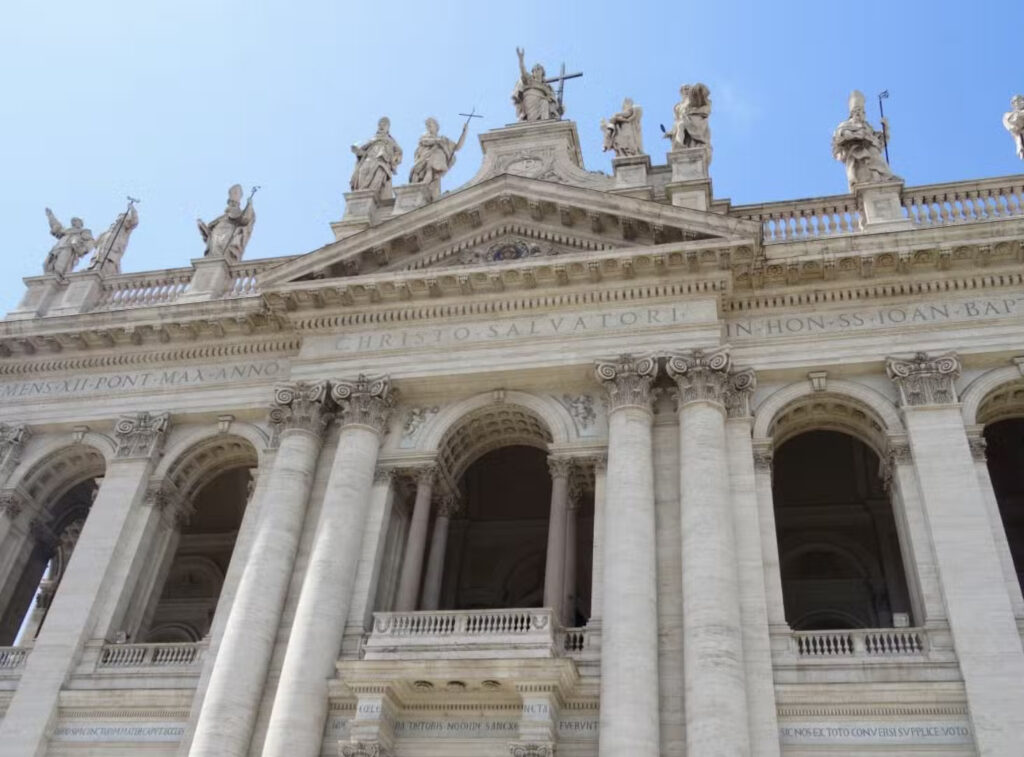
This weekend’s feast honors a physical space that has held prominence as the “mother of all Christian churches” throughout the centuries—a space that represents the beginnings of the Catholic Church in Rome, the Basilica of St. John Lateran.
The custom of consecrating or dedicating sacred places is a ritual found in nearly all religious traditions. Setting apart a place for God is an act of recognizing God’s dwelling among us–the One to be honored and glorified.
Over the centuries, the Judeo-Christian tradition has discerned the immaterial divine presence in specific material spaces: the Ark of the Covenant, the Jerusalem temples, the womb of a Galilean girl, the bread and cup, the cross and tomb, the upper room.1
For Jesus, the Temple was more than a sacred structure—it was the symbolic expression of all that is true, good, and beautiful, the ultimate hope and desire of his people for the presence of God.2 It was also a symbol of who he was: God’s holy and living temple made flesh, through whom all are invited into the life of the Eternal.
Saint John Lateran is the pope’s own church—the cathedral of the Diocese of Rome, where the Bishop of Rome presides. The Lateran Basilica holds a place of profound significance: it was the first basilica built after the end of Christian persecution in 313. Rising in the fourth century on land granted by Emperor Constantine, once belonging to the noble Lateran family, it became the heart of Christian Rome. Though scarred by fire, earthquakes, and war, it endured as the church where popes were consecrated.
The present structure was rebuilt under the pontificate of Benedict the XIII and dedicated in 1724 where it stands today as one of Rome’s most majestic churches. It was at that time that the feast celebrated today was established and extended to the universal Church.
This feast reminds us that the Lateran Basilica is more than a sacred building—it is a symbol of the entire Church. It stands as a sign of unity, binding us to our ancient roots and to the See of Rome. We are called to remember that the churches of stone and wood we cherish are but reflections of a deeper mystery: that we ourselves are living temples of God, consecrated in the waters of Baptism and by the Spirit, and sent forth to proclaim the good news of salvation to all the world.
——–
1 Reflection on the Feast of the Lateran Basilica in Rome, Alan Hommerding, © 2025, NPM, Washington, DC.
-
November 2, 2025 - Issue #8 - Liturgical Year: All Souls Day
LITURGICAL YEAR: All Souls Day
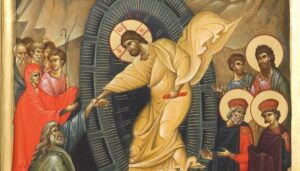
All Souls Day, the commemoration of the faithful departed, is celebrated on November 2, and intimately connected with the Solemnity of All Saints, celebrated on November 1. When it falls on Sunday, the Mass texts are from All Souls and there are numerous options for the scripture readings which can be taken from the Order of Christian Funerals.
Historically, in the late 900s, Odilo of Cluny established a commemoration on November 2 for all Cluniac (monastic) houses. The custom spread quickly throughout Europe but was not adopted in Rome until the 13th century. It continues to this day.1
The Solemnity of All Souls naturally follows that of All Saints. Together, these two feasts point to our deep belief in the communion of saints—the holy ones who have gone before us and who now intercede for us before God. We remember in a special way our family members and friends who have died, the lonely and forgotten, and even those public figures whose lives have inspired and shaped our own. It is a time to honor their memory by not only recalling but by living the graces and gifts they embodied during their earthly lives.
The celebration of All Souls invites us also to reflect on our own future and to remember those who have preceded us in death. A time to affirm our faith in the resurrection—not only the lifting up of Christ’s victory over death, but as the promise of our own share in that glory.
Sunday’s commemoration of all the faithful departed celebrates the gifts of eternal life and peace. It gives us sacred space to grieve all that has changed with the loss of a loved one. Together, we come to rejoice and to weep, to wonder and to remember the Easter promise: that hope does not disappoint, and that we are a resurrection people—honoring those who have gone before us by living that mystery and promise here and now, in this moment, in this time.
__________________________
1Witczak, Michael, The New Dictionary for Sacramental Worship, editor, Peter Fink. @1990, The Liturgical Press. Chicago, Il. - October 26, 2025 - Issue #7 - Sacred Space: The Altar
-
October 19, 2025 - Issue #6 - Sacred Space: The Ambo
Sacred Space: The Ambo
 Along with the altar, the ambo is one of the most essential and sacred liturgical elements in every Catholic church. At the beginning of each weekend liturgy here at the Center, we speak of gathering around both the table of the Word and the table of the Eucharist—to be nourished and transformed for the life of the world. Theologically, the ambo and the altar both represent the presence of Christ: Christ who speaks in the Word proclaimed, and Christ who is taken, blessed, broken, and shared in the Eucharist.
The word ambo, akin to lectern or pulpit, comes from the Greek ambōn, meaning “step” or “elevation.” Its roots are believed to lie in the raised platforms from which Jewish rabbis proclaimed the Scriptures. The ambo first appeared in churches during the fourth century and, over time, was often beautifully crafted from precious woods or marble.
For centuries before the liturgical reforms, the priest proclaimed the Scriptures at the altar itself—on what were known as the “Epistle side” and the “Gospel side.” Today, the Word of God has its own dedicated place: the ambo.
The ambo’s primary purpose is to be the place from which the Scriptures are proclaimed. We begin our eucharistic celebration with the Liturgy of the Word, our attention drawn to this “altar” of the Word—where readings from the Old and New Testaments, the Responsorial Psalm, and the Gospel are proclaimed. From this place, too, resound the Homily, the Universal Prayer (Prayer of the Faithful), and once each year, the great Easter Proclamation, the Exsultet.
The ambo is intended to look special and given a fixed place in the sanctuary. Its location should be near the main altar and visually accessible to all. The ambo in our chapel is distinctive: it is crafted from the same wood and designed in the same style as the altar. Like the altar, it is adorned with a lit candle during the liturgy—an intentional sign of its deep connection to that sacred table where we encounter the living Christ, present in both Word and Sacrament.
-
October 12, 2025 - Issue #5 - Sacred Space: Why No Kneelers?
Sacred Space: Why No Kneelers?
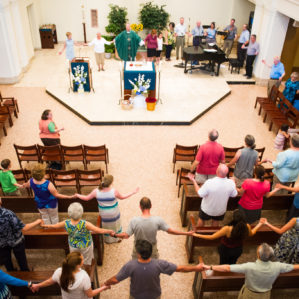
For those who have worshiped at the Paulist Center for years, the absence of kneelers often goes unnoticed; for those new to the space, it can be a surprise and a source of curiosity. This feature of our chapel sets it apart from most Roman Catholic churches.
In the early Church, standing was the common posture for prayer—a sign of respect, unity, and Easter joy. The Council of Nicaea (325) even prescribed that prayers on Sundays and during the Easter season be offered standing. Kneeling, by contrast, symbolized penitence, humility, and private prayer and was generally reserved for Lent or other penitential times. Over time, however, kneeling became the norm throughout much of the Mass.
Following the Second Vatican Council, the 1969 General Instruction on the Roman Missal (GIRM) emphasized posture as a communal sign of unity and restored the ancient custom of standing during most of the liturgy, especially for the Eucharistic Prayer. While many countries adopted this norm, the U.S. Bishops retained the custom of kneeling from the Sanctus through the conclusion of the Eucharistic Prayer. This adaptation was reaffirmed in 2000, though the GIRM notes that the universal practice of the Church is to stand throughout the Eucharistic Prayer, kneeling only at the consecration.
When the chapel was renovated in the mid-1970s, and again in 2000, the Center followed the local tradition of standing and chose not to reinstall kneelers. This decision reflected the early Church’s practice of standing as a sign of unity, joy, and thanksgiving.
With the most recent renovation, however, the Paulist Center did not intend to eliminate kneeling altogether. Several chairs in the chapel are now fitted with kneelers for those who wish to kneel in private prayer or adoration before the Blessed Sacrament.
Our posture in worship matters because our bodies express the attitude of our hearts. Just as body language reveals our disposition toward another, our posture in prayer expresses our spirit before God and one another. During the Eucharistic Prayer especially, standing together—physically or in spirit for those who due to physical or other limitations are not able — embodies our unity, our thanksgiving, and our participation in the Paschal Mystery.
- October 5, 2025 - Issue #4 - Sacred Space: The Cross and Corpus
-
September 28, 2025 - Issue #3 - Sacred Space: The Tabernacle
Sacred Space: The Tabernacle
 Among all the liturgical appointments found in our churches, the history, meaning, and purpose of the tabernacle remains one of the most misunderstood.
The word tabernacle comes from the Latin tabernaculum, meaning “tent” or “hut.” It holds two related meanings: a place of temporary dwelling, and a place where God resides.
In the early Church, Christians cherished the Eucharist so deeply that they began reserving a portion of it for those too ill to gather with the community. A representative would bring the consecrated host to the sick—a tradition we continue today through our Eucharistic ministers.
Over time, the tabernacle came to serve several important purposes. First, it was a storehouse for the Eucharist to be brought to the sick. As its significance deepened, it became a focal point of devotion and private prayer. Eventually, it also took on the practical role of holding reserved hosts for Mass, in case more was needed during the distribution of Communion.
The placement of the tabernacle has also shifted over time. Before Vatican II, it was typically located at the center of the high altar. With the Council’s reforms—especially the priest facing the people—the altar was moved forward, and the tabernacle was either left on the old high altar or placed on a smaller side altar.
In many modern churches, the tabernacle is placed in a dedicated Blessed Sacrament Chapel near the main worship space. This allows the reserved Eucharist to be housed in a separate chapel or alcove, while remaining accessible for its original and primary purpose: distribution to the sick and homebound.
In our chapel, the tabernacle is recessed into the wall of the alcove in the front right corner of the chapel. Like our altar, it is carved from mahogany. This symbolic link highlights the connection of our liturgical action with adoration and communion to the sick and homebound. Designed and hand-carved by Fr. Frank Sabatté, CSP, this simple yet beautiful tabernacle reminds us, just as we are reminded each time the community gathers around of the table of the Word and table of the Eucharist, that Christ is always present among and within us.
For more detailed information about the design of our tabernacle, please visit:
www.paulistcenter.org/our-chapel -
September 21, 2025 - Issue #2 - Sacred Space: the Baptismal Font
Sacred Space: The Baptismal Font
 “You have put on Christ; in him you have been baptized.” These words of the apostle Paul are proclaimed at every baptism celebrated here at the Paulist Center. They express the core Christian belief that through the sacrament of baptism we not only become members of the Christian community, but also a new creation in Christ, baptized into his life, death, and resurrection.
Water is both destructive and life-giving. It can overwhelm and destroy, yet it also sustains, cleanses, and refreshes. From the earliest days of the Church, baptism by immersion in water stood as the central ritual of Christian initiation, making water itself one of the most powerful symbols of our sacramental life.
Through the centuries, the baptismal font took on many shapes and forms. After the Edict of Milan legalized Christianity in the early fourth century, baptistries were often built beside churches, underscoring baptism as the gateway into Christian life. Fonts were commonly:
- Octagonal (eight-sided): symbolizing the “eighth day,” a sign of resurrection and new creation.
- Circular: representing eternity and perfection.
- Cruciform (cross-shaped): signifying one’s participation in the life, death, and resurrection of Christ.
Fonts were typically made of stone or marble, often large enough for full immersion, which was the standard practice in the early Church. Many were placed below floor level to emphasize descent into a kind of tomb, symbolizing death and resurrection, and were frequently enhanced with steps, columns, or mosaics.
As part of the renovation of our chapel in 2000, careful research and discernment guided the design and placement of our baptismal font. While many churches throughout the centuries—even in the decades following Vatican II—have smaller, freestanding fonts intended only for the pouring of water over one’s head, our community sought to recover the fuller symbolism of immersion. Our eight-sided marble font, affixed to the chapel floor, with a water depth of about two feet, was conceived to allow for baptism by immersion in keeping with the tradition of the early Christian Church.
Its placement is distinctive. Due to the unique and somewhat limited floor plan of our chapel, the decision was made to locate the font directly behind the altar, beneath the Cross and Corpus. Although this differs from the more common placement near the entrance, it ensures that the font is visible and accessible to the entire assembly during baptismal liturgies, highlighting baptism as a central act of our shared faith.
- September 14, 2025 - Issue #1 - Introduction to the Series